
Choosing the Right Concrete Finish for Utah's Climate
Cedar City's climate eats concrete finishes that work fine in milder regions. Here's what to spec for surfaces that still look right in ten years.
If you've lived in Cedar City for more than a winter, you've probably noticed: concrete that looks beautiful in the showroom catalog often looks tired by year three on your driveway. The reason is climate. Iron County throws three things at concrete that softer climates don't: 100+ days a year of UV intensity at 5,800 feet, freeze-thaw cycles that can hit thirty in a single shoulder season, and de-icing chemistries that accelerate surface scaling.
Picking the right finish for your project is half art, half engineering. Here's how we think about it at A to Z, broken down by the four finishes we install most often.
Broom Finish — The Workhorse
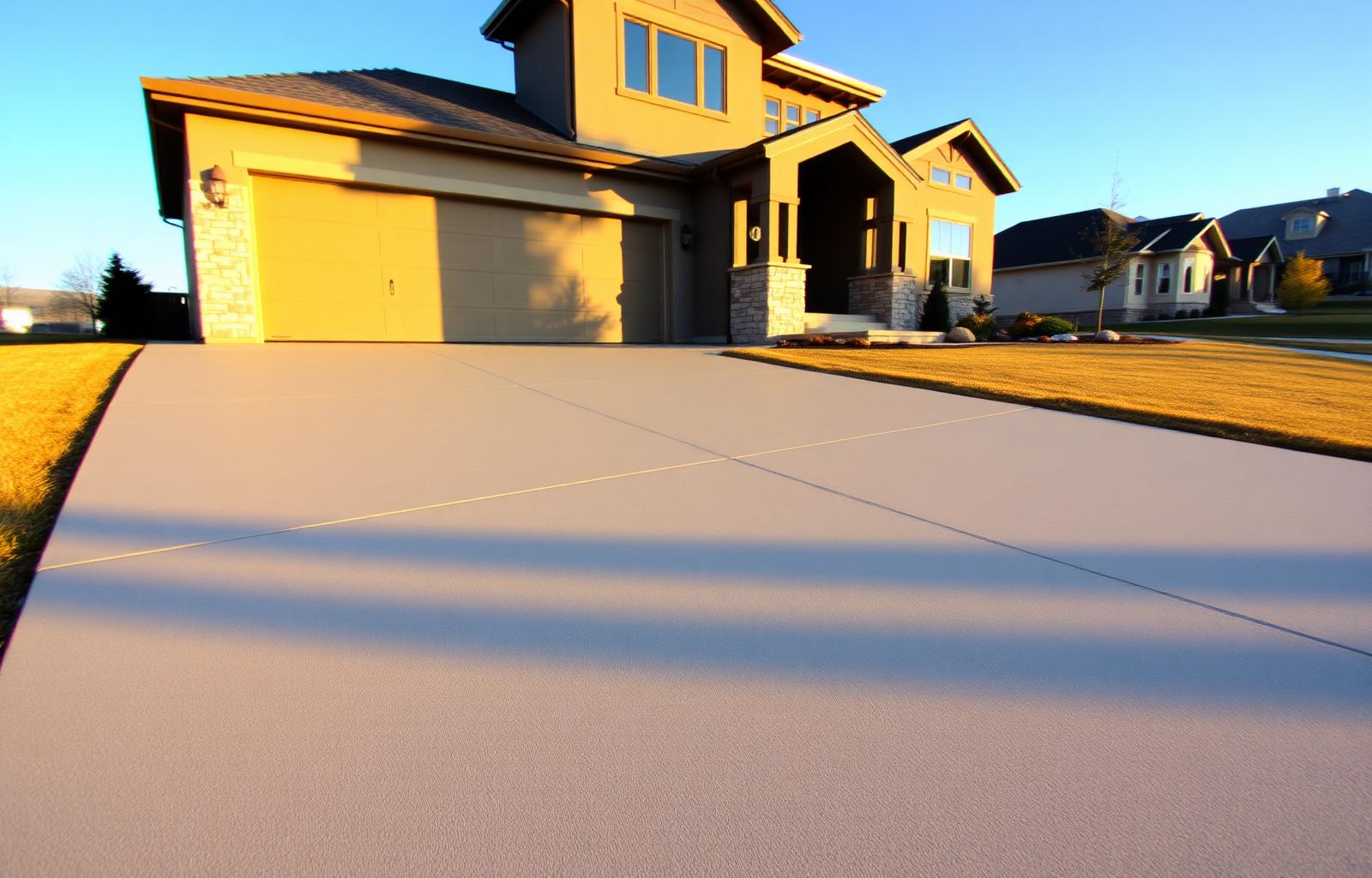
The classic broom finish gets dismissed as "basic," and that's exactly why it's the right call for driveways, sidewalks, and garage approaches. A medium-broom finish gives you traction in snow (critical in Cedar City's winter slopes), hides minor surface settling, and uses no decorative treatments that can fail.
When we recommend it: Any flatwork where function trumps showmanship — driveways, RV pads, side approaches, commercial walkways. Spec a 4,500 psi mix with air entrainment for our freeze-thaw cycles, and you'll get 30+ years of service with minimal maintenance.
What to avoid: Skipping the air entrainment. Mixes designed for milder climates skip it to save cost; in Cedar City the result is surface scaling within five years.
Stamped Concrete — Best for Patios and Walkways
Stamped concrete imitates flagstone, brick, slate, or cobblestone using a release agent and a pattern mat pressed into wet concrete. Done right it's stunning. Done wrong it's a nightmare of color fade, surface flaking, and slip hazards.
What goes wrong in Cedar City: The integral color additives in most stamped mixes fade noticeably from UV exposure within 5–8 years. The acrylic sealer that lock in the color and protect the surface degrades faster at our elevation and needs reapplication every 2–3 years instead of the 5-year cycle advertised in catalog literature.
How we install it: Higher pigment loading than spec to account for fade, a UV-stabilized sealer, and a clear written maintenance schedule. Stamped patios make sense for outdoor entertainment areas and pool decks where you'll genuinely appreciate the appearance and you're willing to maintain the sealer.
Exposed Aggregate — The Underrated Pick
Exposed aggregate finishes wash away the top layer of cement paste while the concrete is still curing, revealing the stone aggregate beneath. The result is a textured, natural-stone-look surface that hides UV fade better than stamped concrete because the visible color comes from the stone, not from added pigments.
Why it works for Utah: Excellent traction in winter, doesn't show wear or staining, no color fade. The texture also conceals the minor surface irregularities that show up on broom finishes over time.
Best for: Patios, pool decks, walkways, courtyards. Avoid for driveways unless you specify a smaller aggregate — chunky exposed aggregate is hard on tires and snow shovels.
Polished Concrete — Interiors Only (Mostly)
Polished concrete is a multi-step mechanical grinding process that exposes the aggregate and produces a glossy, durable interior surface. We do a lot of this for kitchen, basement, and shop floors — it pairs beautifully with our remodeling work.
Why not exterior: A polished concrete surface holds water on top and freeze-thaw destroys it within a few cycles. Polished concrete is for indoor floors. Period.
What we love about it: Zero maintenance after the initial install. Resists stains, doesn't off-gas, works with radiant heat. A 5,000 psi structural slab polished to a high gloss looks like luxury terrazzo at a fraction of the cost.
Our Standard Specifications for Iron County
- Mix design: 4,500 psi minimum for residential flatwork, 5,000 psi for driveways with vehicle traffic, with 5–7% air entrainment.
- Reinforcement: #4 rebar on 18-inch centers for driveways and slabs; fiber-reinforced mix for sidewalks.
- Sub-base: 4 inches of compacted road base over native soil, with a vapor barrier on interior pours.
- Curing: Wet cure for 7 days or chemical cure compound — not just left to "air dry" in the sun.
- Joints: Saw-cut control joints within 12–24 hours of pour, spaced no further than 24 times the slab thickness.
What This Means For Your Project
The cheapest concrete is rarely the right concrete in Cedar City. The difference between a properly specified pour and a value-engineered one is maybe 10–15% on a typical residential project — and 25 years of service life. When we estimate concrete work, we'll spec for the climate, explain the tradeoffs, and let you decide what fits your budget and how long you plan to be in the home.
Planning a project? Browse our concrete services or request a free estimate. We'll walk the site, talk through the options, and write you a real number.
Ready to start your project?
A to Z Construction · Cedar City, UT · Licensed B-100 General Contractor